By Roni F. Matar (Lebanon)
Since 2013, I have had the chance to work with 3 clients who said they had Misophonia, either based on a diagnosis or on a Google search. The similarity between the problems presented here was that certain sounds create certain emotions. At the time, I perceived this as a basic stimulus-response structure, given the Alphabet Therapy mindset, as I was fresh off several courses. A person hears sound A, and response B happens. The first thought that came to mind was using the NLP Technique, Collapsing Anchors, and disconnecting the connection between the stimulus and response. With one particular client, who, in her own words, would go insane when she heard her grandma chewing and had to contain her anger explosions because, after all, it was her lovely, sweet grandmother.
I tasked her with going and discovering all the sounds that annoyed her. Over four sessions spread across three months, she would visit, mention the sound, and I would work with the emotions before she went on her way, which worked on those specific sounds, and she was happy with the result. Looking back now after learning Metaphors of Movement, I realised that I had totally missed the actual structure of her problem.
In MoM terms, she was passive towards what was happening. The sounds make me angry. If I only knew then what I know now…
Moving towards 2021, I posted on social media that I was using Andy’s version of the Phobia Model without words: https://www.youtube.com/watch?v=T3x3ABWC7SE&t=133s
A guy reached out, mentioning he has had the problem of Misophonia all his life, and he is consistently teased and triggered by others because they knew about his problem. We set a session and did the call a couple of weeks later.
The metaphor was very simple: he was in a completely dark room, couldn’t see the walls but knew they were there. He was laying on his back on the floor with a soldier-like character having his left foot on his chest. He knew it was a soldier-like character because he could only see the shoe, which is called “Ringer” here in Lebanon. He could see nothing else from the character.
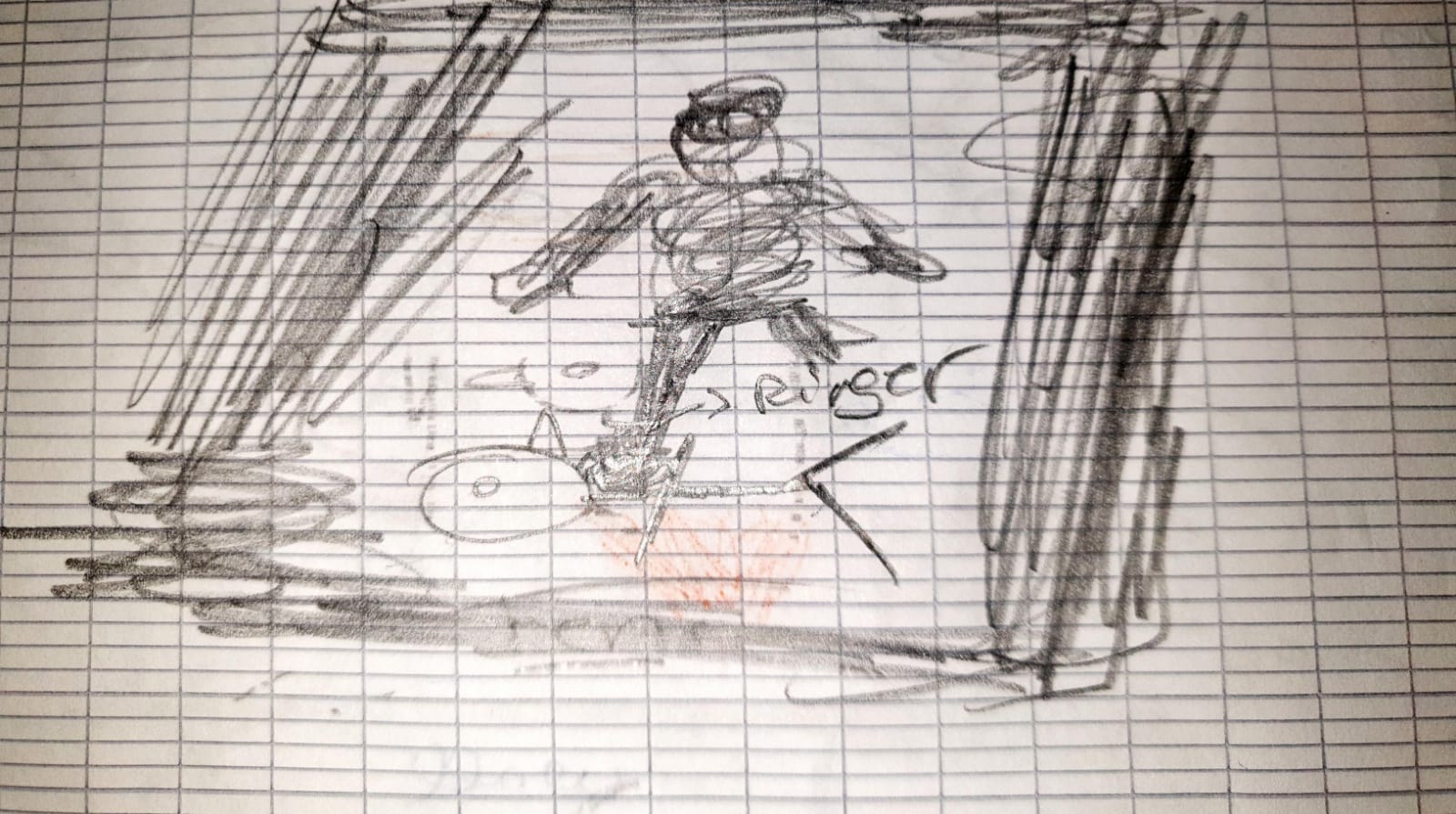
The digital nature of the metaphor made working with him very simple, given that he could neither stand up for himself nor be completely connected to the grounds of the situation, lying down completely. I got him to grow up, and he was able to create some movement, but the lightening up part was a bit of a challenge, as in Arabic it does not have the same linguistic ambiguity effect it has in English, and I am still playing around with words to see what else can be used. He then mentions that he has specific memories of being around his dad making these sounds around him when he was a kid and had to keep his mouth shut as it was his father. This was in a 30-minute conversation. We set a session for the following month to do some memory-based work on the memories that have a high emotional response related to them.
Two weeks later, I reached out to check on how he was doing, he replied: “Would you believe me if I told you that I feel better? I have no idea how, but I just am not noticing the sounds as much as I did before.” Because he experienced these triggers regularly at home, this suggested that some progress had occurred.
Metaphors of Movement can reduce some of the guesswork in changework, as uncovering the actual structure of a certain problem makes dealing with it much more straightforward and connected with the client’s experience.

