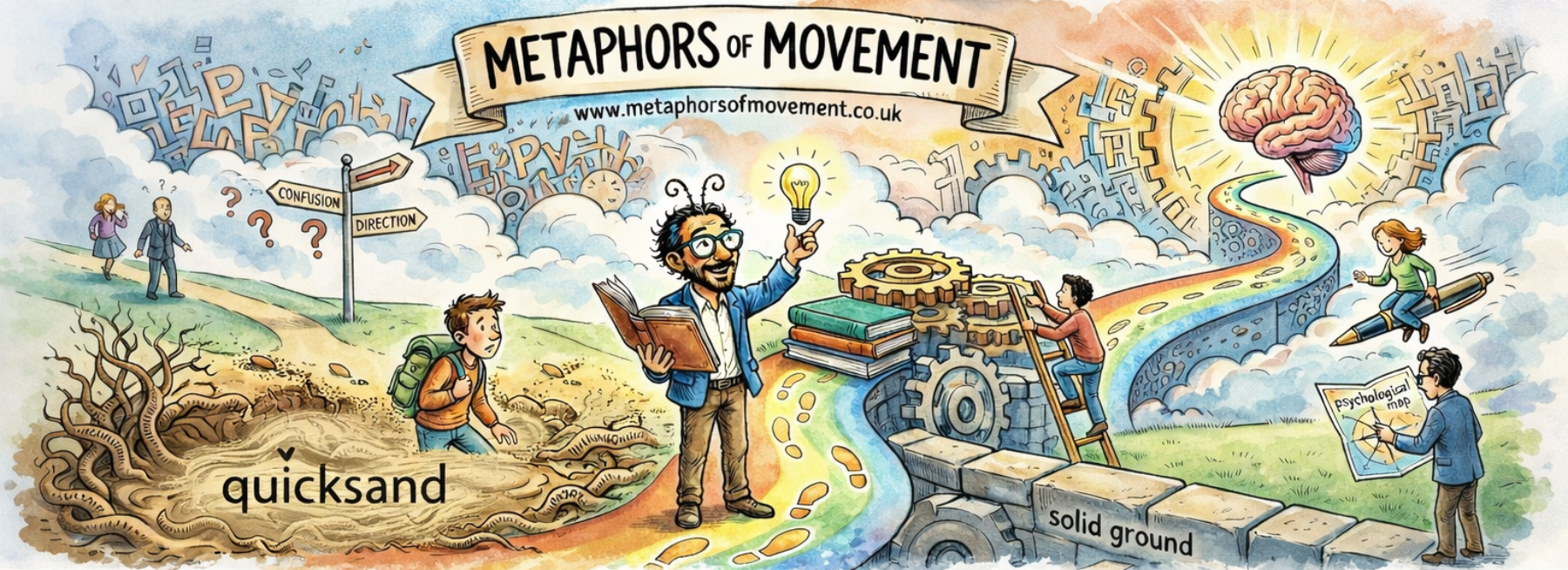
The Metaphors of Mind
Comparing Structural Frameworks in Modern Therapy
Different models of therapy hold radically different views on the nature of human suffering and on the methods employed to relieve it.
Competing Therapeutic Models
Energy Psychology (EFT)
Sees distress as “blockages of energy.” Gary Craig posited that negative emotions result from an imbalance in the body’s energy system. Rituals (taps) are used to “unblock” flow, mirroring the principles of traditional Chinese medicine.
NLP (Neurolinguistic Programming)
Views the brain as a computer to be programmed. Uses IT metaphors like “negative programming,” “installing ideas,” and “thought viruses.” Training is frequently “updated” to reflect IT parallels.
Hypnotherapy & The Unconscious
Often describes the mind as an ocean or an iceberg. Hidden issues reside at “deep levels” beneath the surface. Clients are encouraged to go deeper or allow things to “rise to the surface.”
The Sedona Method
The mind is a container for feelings, which are treated as commodities or objects to be retained. Therapy focuses on “releasing” emotions and “letting go.”
Psychiatry
Leans towards “chemical imbalances” caused by brain hormone deficiencies or genetic dispositions. These are rebalanced using chemical medications.
Gestalt & Recovered Memory
Gestalt sees “unfinished business” requiring “closure.” Recovered Memory therapy sees the mind as a “mechanical box” using “massive repression” to hide secrets; the goal is to “lift the lid.”
The Problem with Preferred Models
A significant problem in therapy is that the practitioner often fits whatever communication is offered into their preferred model. Meaning is inferred upon the client’s reportage, and the client’s actual meaning is lost in the frame.
This reframing, no matter how artful and clever, often serves merely to negate the client’s experience for the duration of the therapy sessions. With all models, a causal explanation for distress is forced into the top-level metaphorical construct.
Invoked Metaphors of Mind
Mind as a machine: With cogs that go around.
Mind as a computer: To be programmed.
Mind as an organic entity: To be fed and exercised.
Mind as a territory: To explore.
Mind as a tool: To be honed or sharpened.
Mind as a servant/employee: To be trained.
Case Example: “I am in a pit of despair”
Observe how different practitioners override this spatial report with their own models:
| Approach | Typical response |
|---|---|
| The Gestalt Therapist | Explores unfinished business. |
| The Psychiatrist | Examines for a chemical imbalance. |
| The Sedona Practitioner | Releases the feelings of despair. |
| The Energy Therapist | Unblocks happiness meridians. |
| Recovered Memory | Looks for hidden memories of abuse. |
| The Psychoanalyst | Looks for ego conflicts. |
Metaphors of Movement asks: What if the client is simply in a pit?
