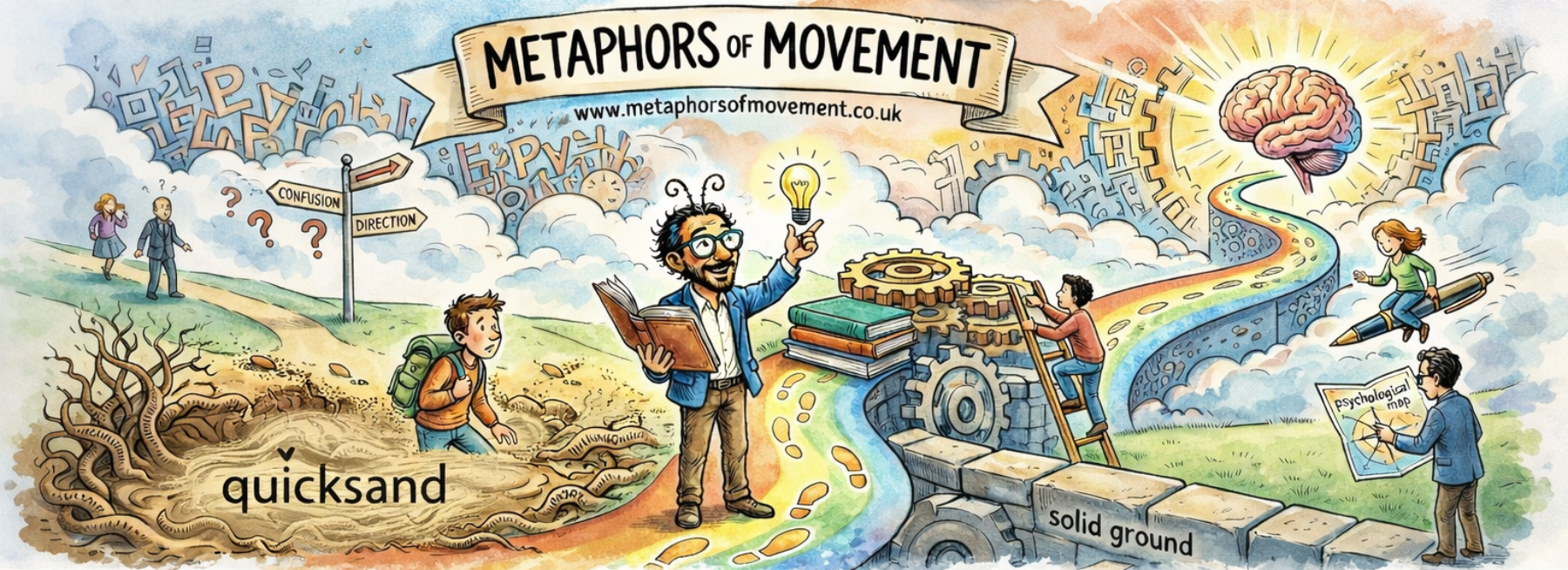
The Origins of Metaphors of Movement: An Interview with Andrew T. Austin
Andrew T. Austin, the creator of Metaphors of Movement and Integral Eye Movement Therapy (IEMT), recently shared insights into the development of his innovative therapeutic approach. Here are the key takeaways from the interview:
The Catalyst: Charles Faulkner
Austin credits Charles Faulkner as a significant catalyst for the development of Metaphors of Movement. After attending Faulkner’s presentations, Austin found himself “completely bamboozled” but intrigued, which sparked an inward journey of reflection.
A Convergence of Influences
The development of Metaphors of Movement was influenced by several factors:
- Austin’s work with IEMT and identity work
- Exposure to Clean Language techniques
- Experience with challenging clients in mental health
A New Way of Listening
Austin began to hear people’s expressions differently, focusing on the literal meaning of idiomatic phrases rather than interpreting them. This shift allowed him to uncover the underlying structures in people’s representations of their experiences.
The Richness of Autogenic Metaphors
Austin emphasises the extraordinary data density found in autogenic metaphors, believing that we’ve only scratched the surface of their potential. He suggests that future practitioners may uncover even more applications and insights.
A Response to Traditional Therapeutic Models
Metaphors of Movement was developed partly as a response to the limitations Austin observed in traditional therapeutic approaches, including:
- The need for clients to “play along” in hypnosis or NLP
- The challenge of working with resistant or non-compliant clients
- The disconnect between increasing numbers of therapists and declining global mental health
The Future of Metaphors of Movement
Austin views his work as an ongoing exploration, focused on codifying and teaching the skill set to others. He emphasises the importance of honesty in therapy and a realistic approach to expectations and outcomes.
For those interested in learning more about this unique therapeutic approach, both Andrew T. Austin and the interviewer offer training in Metaphors of Movement.

