In the 6 June 2024 practice group, we held a Q&A with Andrew T. Austin about several topics. Here is the summary.
Understanding Boundary Violations
One significant challenge in metaphor work is handling boundary violations. These occur when clients introduce elements that are not part of the metaphor, such as unrelated conversations or distractions. Andy emphasised the importance of recognising these violations, which can be understood within the model as indicating a dominance of left-hemispheric thinking. By identifying and addressing these violations, practitioners can guide clients back towards more direct engagement with their metaphors.
Encouraging Right-Hemisphere Modes of Processing
To counterbalance left-hemispheric dominance, Andy recommends using techniques that promote right-hemispheric modes of processing. These include incorporating visual stimuli, varying vocal tones and expressing emotions freely. By creating an environment rich in sensory and emotional cues, practitioners can support deeper engagement with metaphors.
Managing Boundary Violations of Dissociated Identity
Clients sometimes present metaphors in a dissociative manner, such as saying, “I see myself in a bubble.” Andy advises practitioners to shift the client’s perspective from observer to participant. Asking questions about their position and surroundings within the metaphor helps anchor them in the experience, allowing for a more detailed exploration of their metaphorical landscape.
Social Functions and Pain Avoidance
Boundary violations can serve as mechanisms for clients to avoid discomfort or social pain. These behaviours may manifest as conversational distractions or changes of subject. Recognising the possible motivations behind these actions can help practitioners navigate and address them.
Identity Changes and Internal Metaphors
Within the model, internal metaphors, such as those involving the loss of body parts, may be associated with significant identity changes. These metaphors can highlight issues related to support, understanding and personal growth. Practitioners need to assess whether clients are open to engaging in a process of healing and growth or are seeking immediate symptomatic relief. This distinction helps guide the therapeutic approach.
Practical Application: Eliciting and Idiomising Metaphors
Developing skills in metaphor work requires practice. Practitioners are encouraged to elicit and idiomise as many metaphors as possible. Engaging with peers for feedback and participating in practice sessions can improve proficiency. Understanding idioms and how they relate to metaphors is an important part of effective metaphor work.
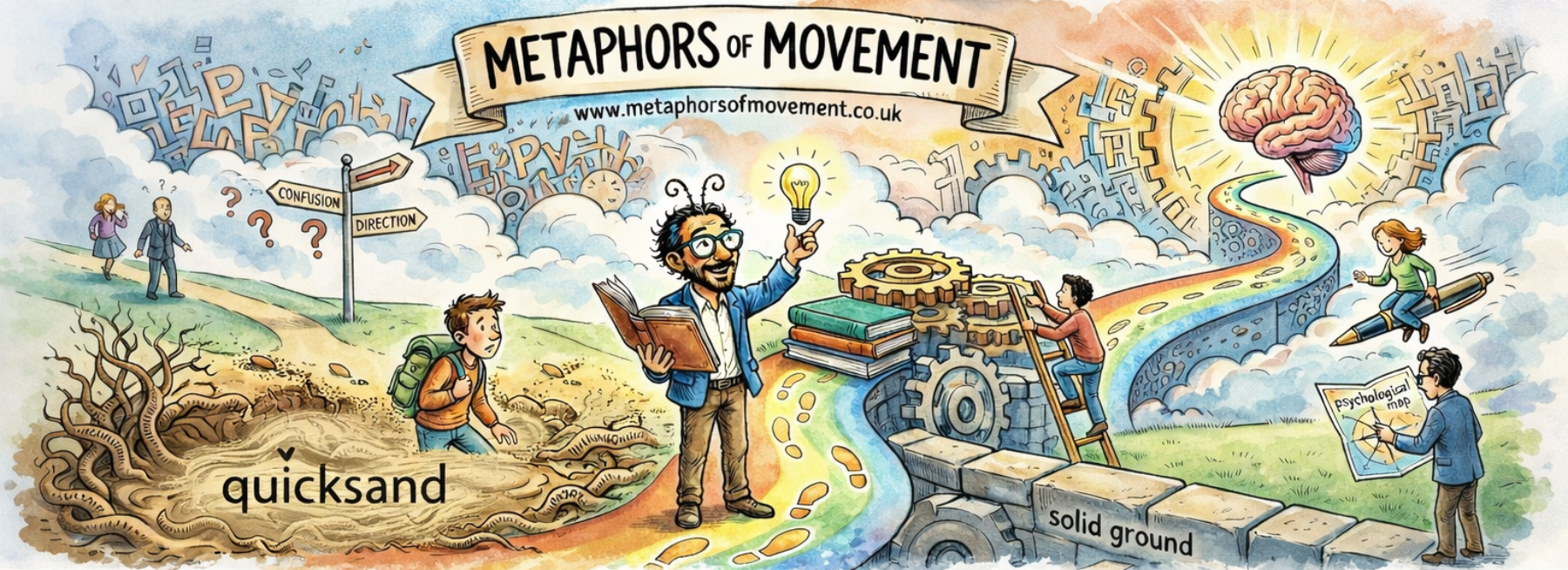
Metaphors of Movement offers a framework for understanding and addressing complex emotional and psychological issues. By recognising boundary violations, using techniques intended to stimulate right-hemisphere modes of processing and exploring the meanings of metaphors, practitioners can support structured therapeutic exploration. Continuous practice and collaboration with peers are important to mastering this approach.
Watch the full discussion below.